
Summary
- The management team at General Electric decided to give shareholders a glimpse into the conglomerate's foreseeable future.
- The business does seem to have some issues still moving forward, but the fact of the matter is that the future is looking much better.
- Investors should be optimistic, especially if transitory issues resolve quickly this year.
- Looking for a helping hand in the market? Members of Crude Value Insights get exclusive ideas and guidance to navigate any climate. Get started today »
Every year, the management team at General Electric (GE) gives an in-depth look into its own expectations for the industrial conglomerate's current fiscal year. With 2019 now out of the way, March 4th made sense for management to peer into the future and see the ups and downs of the 2020 fiscal year. Not surprisingly, there are a lot of bumps expected for the business and shareholders need to be prepared for them. But at the same time, there are also a lot of positive aspects that warrant consideration and appreciation. In all, the company is showing continued signs of recovery, and while I expect 2020 to result in some headaches for the firm, it should also be the definitive turning point for the business that leads it back to high-quality status from an investment perspective.
Some bumps along the way
 Taken from General Electric
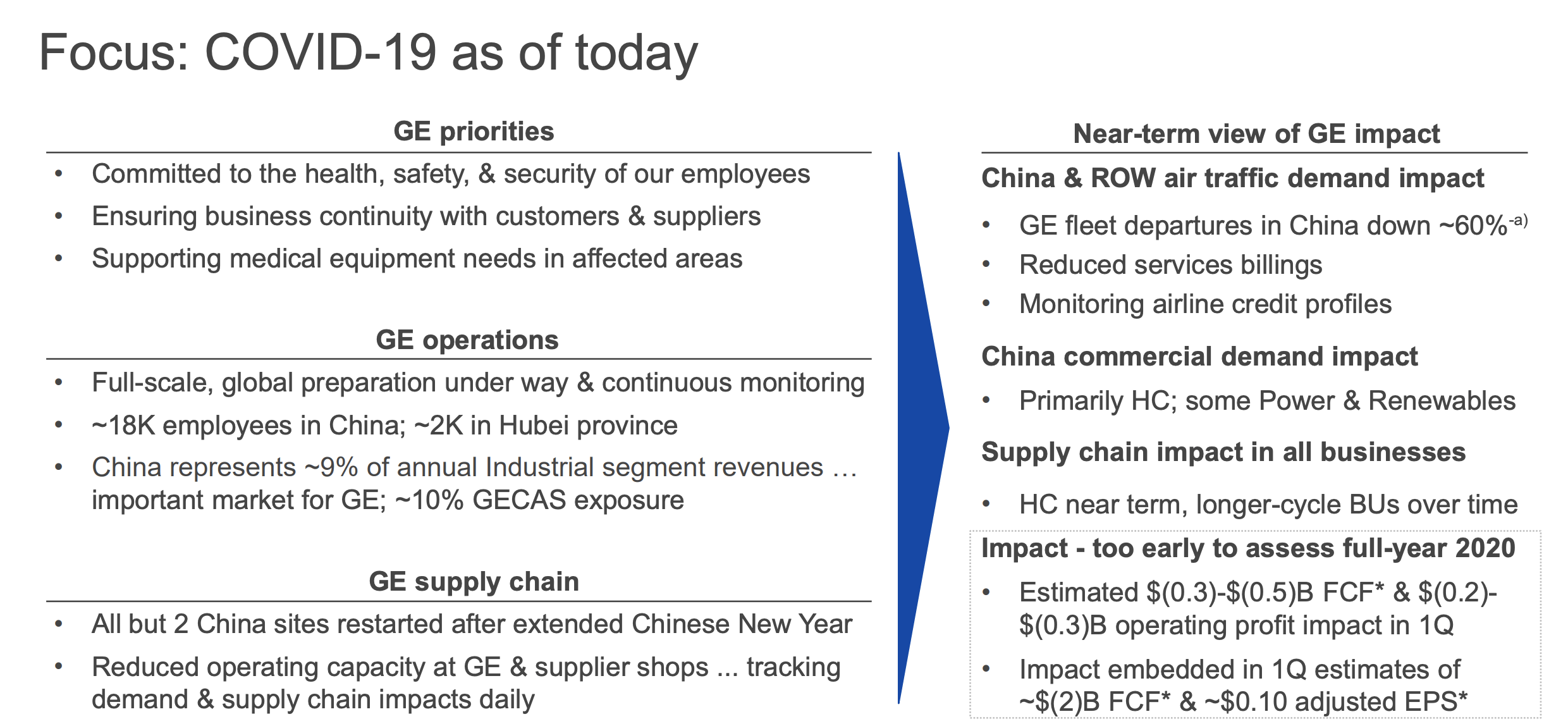
Before we get to the good news, let's hop into the bad. The most interesting thing in management's guidance was the amount of detail associated with the coronavirus, COVID-19. According to management, this will have negative impacts across many of its business operations, but the largest impact will likely be related to the firm's Aviation business. After all, aircraft in General Electric's fleet have seen departures in China decline by 60% as a result of the outbreak. Service billings have dropped as a result of this as well.
 *Taken from General Electric
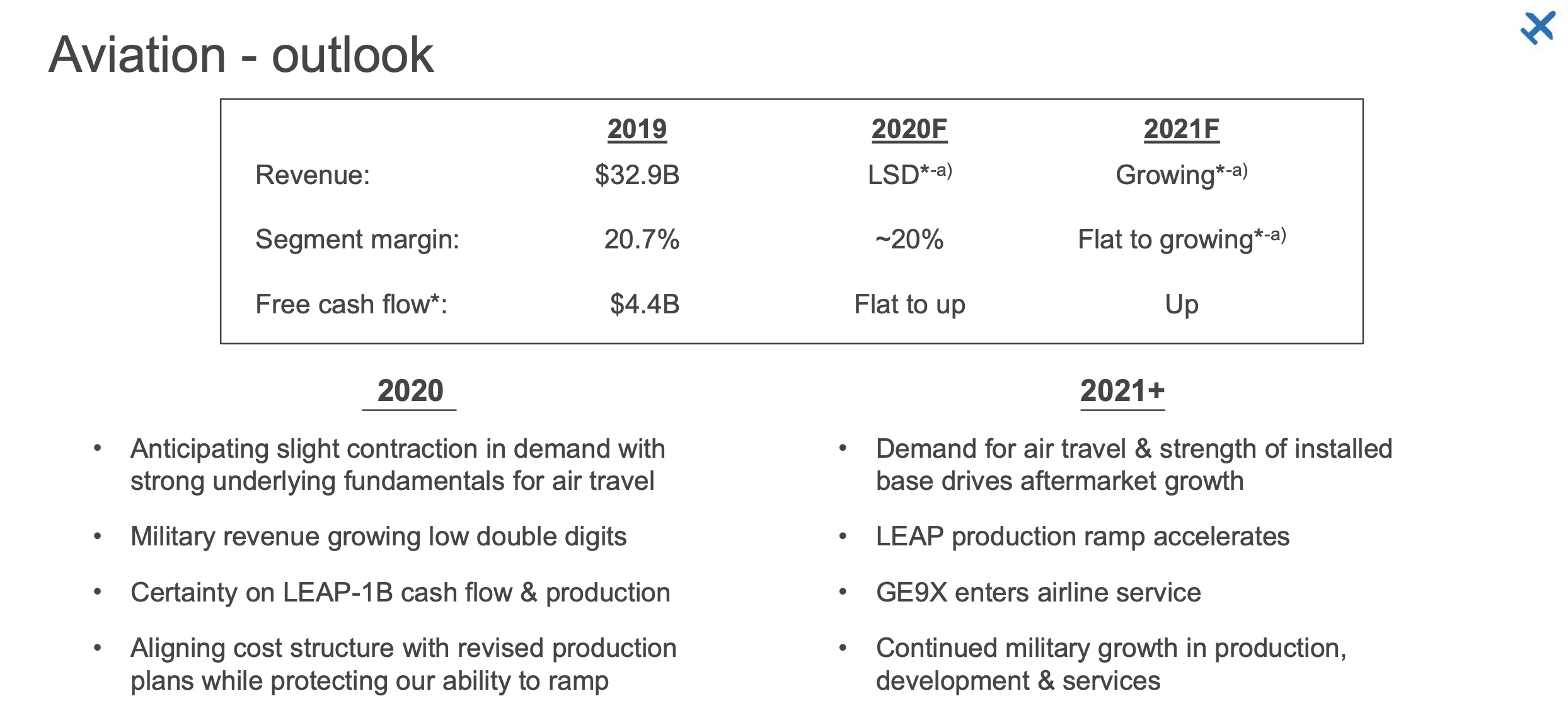
On the whole, the Asia/Pacific region of the world accounts for 35% of all global air traffic. According to the IATA, it's estimated that RPK (revenue per kilometer) in the airline industry will drop 28% from December/January to January/February. It'll then go on to drop another 38% in February/March. Management has been wise not to make assumptions for anything beyond the first quarter, because there's no telling just how long or how bad the pandemic will last. Between all of the aforementioned factors, as well as reduced commercial demand for the firm's Healthcare, Power, and Renewable Energy operations, as well as associated supply chain difficulties, the company believes that COVID-19 will negatively affect free cash flow by between $0.3 billion and $0.5 billion during the first quarter this year. All guidance discussed later in this article assumes issues don't persist beyond the first quarter.

