
Summary
- Traditional department store retail, deemed non-essential for long stretches of 2020, is preparing for the most important holiday quarter in recent memory.
- September retail spending figures showed surprising strength, with both non-store retail and traditional retail holding up.
- Macy's has gutted its goodwill value, managed its inventory down, and is attempting to effectively compete as an omnichannel retailer, but had to borrow heavily to preserve liquidity.
I started raking leaves in my backyard this weekend, which tells me that summer must truly be over and fall is truly here. Kids are planning for Halloween celebrations, while the adults I know are thinking more about how to handle the prospect of large Thanksgiving family gatherings. My siblings and I decided on immediate family only - no aunts, uncles and cousins this year, a first in my family for as long as I can remember.
In what is likely another first, the traditional Black Friday kickoff to getting deals on Christmas shopping starting at Thanksgiving is happening differently this year. The shifts are already evident - Amazon (AMZN) has bumped its two-day "Prime Day" shopping to mid-October, and other retailers have already jumped in, promoting deals with the holiday shopper in mind. The result is both a longer holiday shopping season and the closure of several more retailers for Thanksgiving Day itself. With some high-profile department stores going into bankruptcy this year or closing large numbers of stores, Macy's (M) and Kohl's (KSS) are two of just a handful in the department store category still healthy enough to be hanging on without needing to restructure, at least not yet.
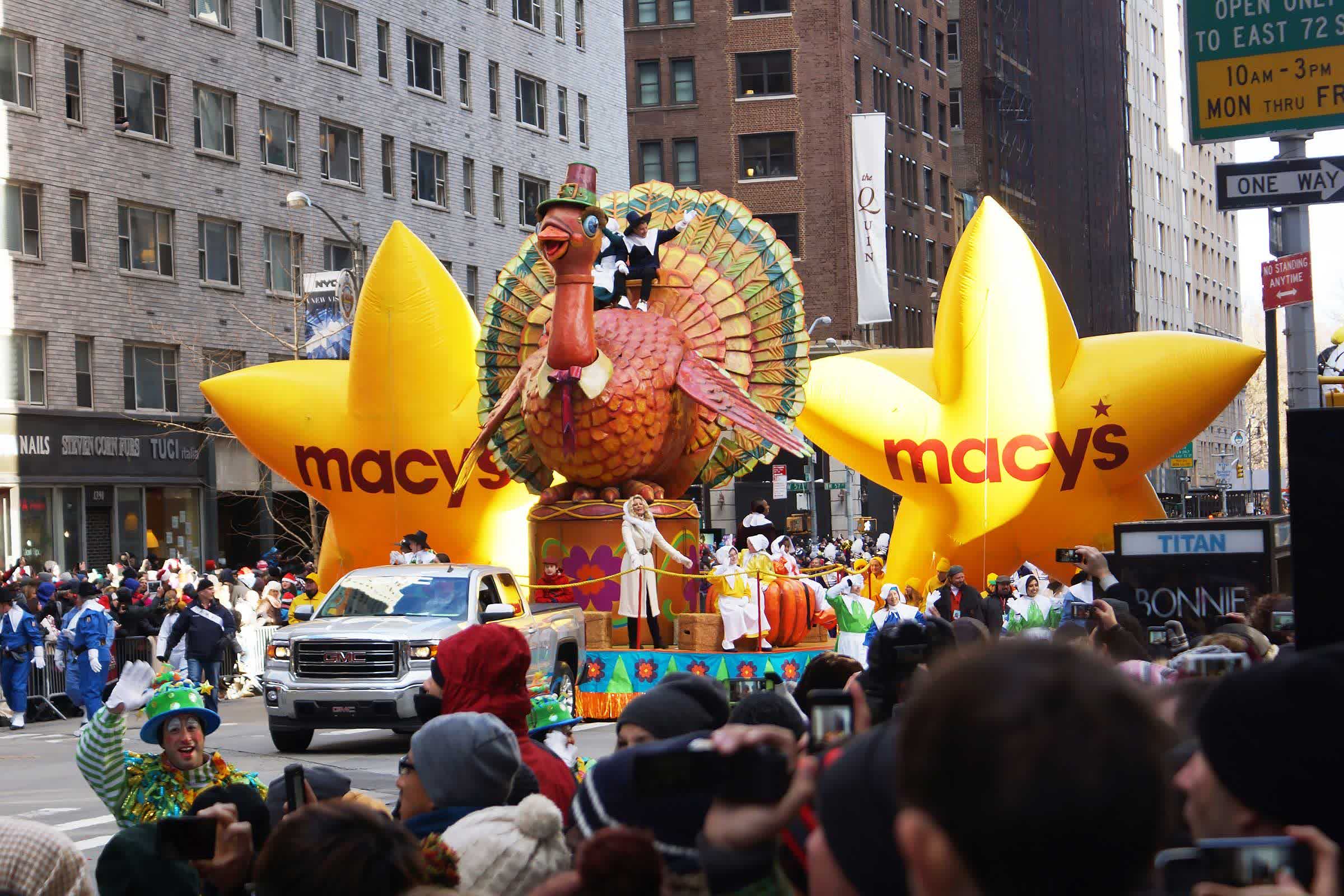
Macy's: Surviving the Crisis... For Now
Heading into 2020, the market was already expressing doubts about Macy's as a viable value creator, but I liked it as something of a contrarian play, specifically because 1) I thought its real estate had legitimate value, 2) the underlying retail business was modestly profitable, and 3) the company's debt was coming down substantively. There was some truth in these, but they have been sort of jumbled up as Macy's responded to the pandemic.
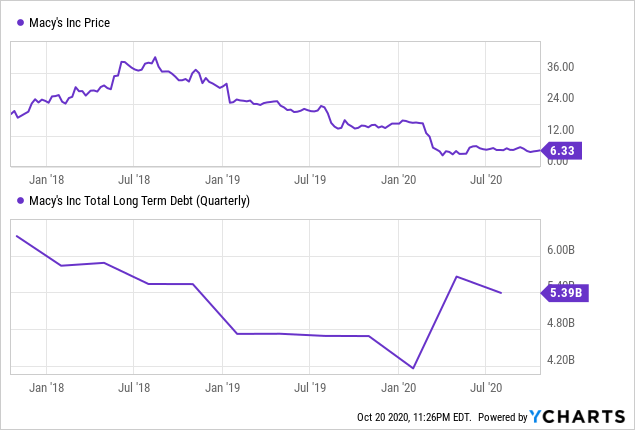 Data by YCharts
The value of some of the real estate is now backing the new debt assumed in June - $4.5 billion in total financing available: $1.3 billion in senior secured notes at an 8.375% coupon maturing in 2025 backed by property, and up to $3.15 billion backed by Macy's inventory, coming due in May 2024. It is not all simply being lumped on top of the existing debt, but basically refinancing debt due through 2021. Seeking Alpha contributor Adam Levine-Weinberg CFA has provided an excellent write-up focused on the specifics.

